
To test colorfastness of printed rayon fabric properly, buyers should evaluate wash fastness, dry and wet rubbing fastness, sweat fastness, and light fastness through both lab methods and practical garment trials. The safest quality decision comes from testing strike-offs, bulk fabric, and finished samples, because print performance can change with process conditions.
Colorfastness of printed rayon fabric is typically tested through wash fastness, rubbing fastness, sweat fastness, and light fastness because one test alone cannot predict real garment performance. Wash fastness is usually the first priority because it shows whether the printed rayon fabric will bleed, fade, or stain adjacent fabrics after laundering. Dry and wet rubbing fastness are essential for printed rayon because surface color transfer can happen more easily on dark shades, heavy prints, and moisture-sensitive constructions. Sweat fastness matters in summer garments and close-to-skin styles because perspiration can trigger staining, shade change, or color migration in poor-performing prints. Light fastness becomes important when garments are worn outdoors or displayed under strong retail lighting, where fading can happen even if wash fastness looks acceptable.
Why Colorfastness Testing Matters for Printed Rayon Fabric
Printed rayon fabric is widely used for dresses, blouses, skirts, and soft fashion garments because it offers fluid drape, softness, and strong print appeal. But rayon also requires careful quality control because printed surfaces may respond differently to washing, rubbing, moisture, and light exposure. A print that looks beautiful during approval can still create costly complaints if colorfastness is not tested before bulk production.
This issue becomes more serious in real sourcing. A buyer may approve a vibrant floral print based on color and handfeel, only to discover later that the fabric bleeds after washing or transfers color when damp. At that stage, the problem is no longer technical only. It affects delivery, garment reputation, and customer trust.
That is why colorfastness testing should be treated as a purchasing decision tool, not just a lab procedure. It helps buyers protect quality, profit, and brand consistency.
The Four Core Colorfastness Tests Buyers Should Check
The most practical way to test printed rayon fabric is to focus on four core areas: wash fastness, rubbing fastness, sweat fastness, and light fastness. These tests cover the most common situations where garments fail after production or sale.
Wash fastness checks how the print behaves after laundering. Rubbing fastness measures whether color transfers when the fabric is rubbed, both in dry and wet conditions. Sweat fastness simulates body perspiration, which matters for garments worn close to skin. Light fastness evaluates whether the printed surface fades under light exposure. Together, these tests provide a more realistic picture of end-use behavior.
Many buyers make the mistake of checking only wash performance. But a fabric can pass washing and still fail in wet rubbing or light exposure. Good evaluation requires a broader view.
How to Check Wash Fastness of Printed Rayon Fabric
Wash fastness is usually the most important starting point because it shows whether the print will bleed, fade, or stain adjacent fabrics after laundering. For printed rayon garments such as dresses and blouses, this matters because consumers expect the print to remain attractive after normal care.
A practical wash fastness review should include two questions. First, did the printed rayon itself lose shade or visual sharpness after washing? Second, did any nearby white or lighter fabric become stained? Both results matter because a print can look only slightly faded while still contaminating adjacent fabrics.
In sourcing practice, buyers should compare the washed sample against the original approved sample under consistent lighting. This is especially important for dark grounds, red tones, navy shades, black prints, and strongly saturated designs.
How to Check Dry and Wet Rubbing Fastness
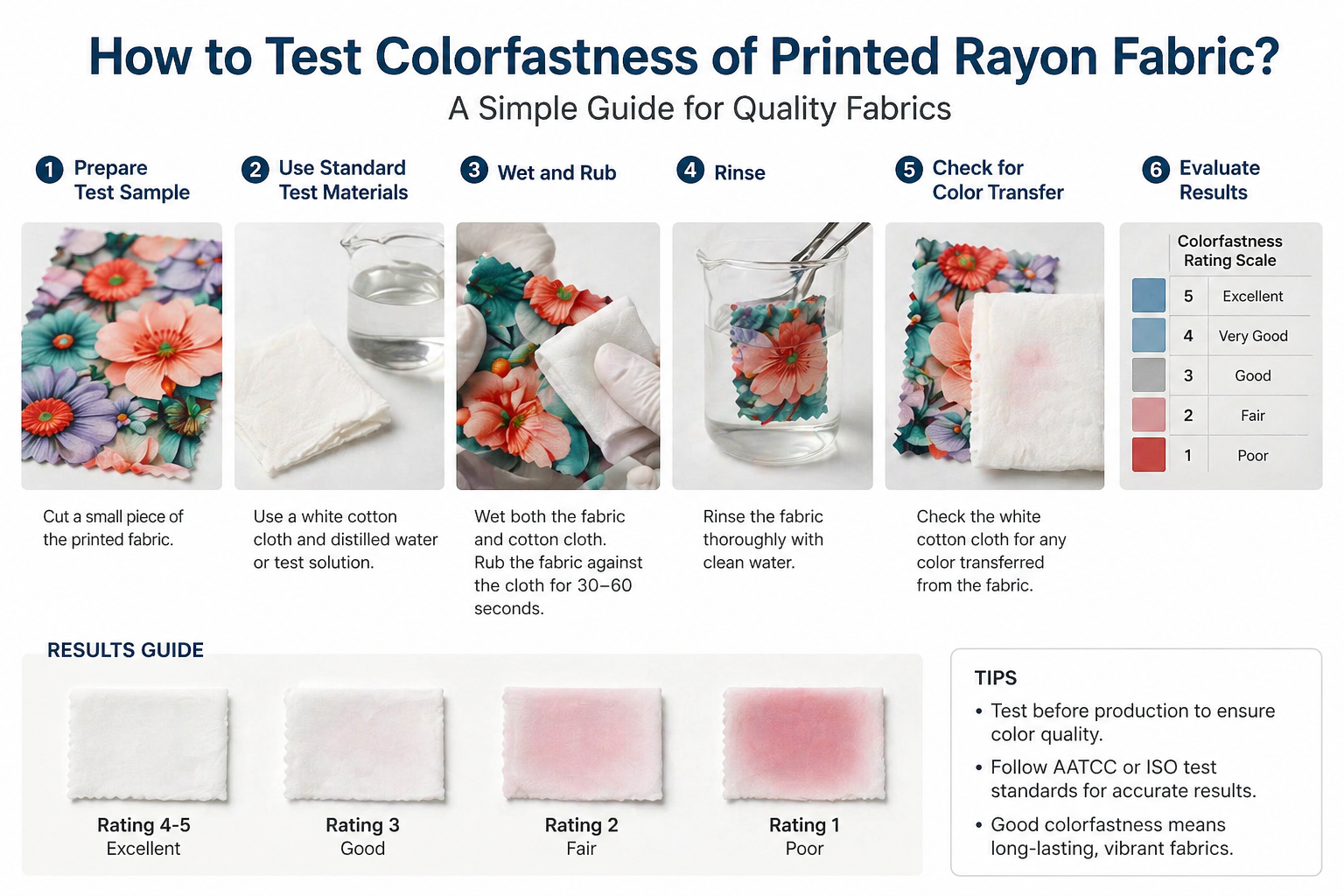
Rubbing fastness, often called crocking fastness, measures whether color transfers from the printed rayon surface to another fabric through friction. Both dry rubbing and wet rubbing are important because real garments face both conditions in use.
Dry rubbing shows surface stability in normal handling, folding, and wear. Wet rubbing is often more critical because moisture can increase color transfer, especially on dark prints and heavily printed surfaces. Many quality complaints begin here. A garment may seem acceptable in the showroom but later transfers color when exposed to sweat, humidity, or damp contact.
Buyers should pay extra attention to rayon prints with deep shades, contrast motifs, and dense surface coloration. These are often the styles that look strongest visually yet need the strictest crocking control.
How to Check Sweat Fastness and Light Fastness
Sweat fastness is important for printed rayon fabrics used in summer garments, fitted dresses, tops, and close-to-skin products. This test helps buyers understand whether perspiration may cause shade change, staining, or print instability. It is especially relevant when garments are worn in warm climates or during long daily use.
Light fastness measures resistance to fading under light exposure. This matters for garments displayed under retail lighting, sold in bright markets, or worn outdoors. Some prints look stable after washing but still lose visual strength too quickly in sunlight or showroom conditions.
These two tests are often overlooked in early sourcing because they feel less immediate than wash fastness. But for many markets, especially fashion retail and summer apparel, they can directly affect customer satisfaction.
Lab Testing Versus In-House Practical Checks
The strongest testing workflow combines formal lab testing with practical internal checks. Lab testing gives structured, comparable results based on defined standards. In-house review helps buyers see how the printed rayon behaves under conditions closer to actual product use.
A simple internal check can include washing a sample according to the intended care method, rubbing the print surface with white cotton cloth in dry and damp conditions, and reviewing any fading or staining under proper lighting. This does not replace professional lab testing, but it helps buyers catch visible risks early.
Third-party labs are especially useful when the buyer needs neutral documentation, export compliance support, or evidence for brand approval. Internal checks are useful for faster decision-making and practical supplier comparison.
When to Test: Strike-Off, Bulk Fabric, and Garment Sample
Colorfastness testing should not happen only once. The safest process checks the strike-off first, then confirms the bulk fabric, and finally evaluates at least one garment sample where possible. This step-by-step approach helps reduce surprises caused by process variation.
The strike-off stage is useful for early screening. Bulk fabric testing is essential because production conditions may differ from the development sample. Garment sample testing adds another level of safety because sewing, fusing, washing, and finishing may change how the print performs in the final product.
Many sourcing failures happen when buyers approve based on the strike-off only. That is too early to assume stable bulk quality, especially for complex prints and sensitive rayon constructions.
How Buyers Should Use Test Results in Sourcing Decisions
Testing only adds value when buyers know how to use the results. The goal is not just to collect reports. It is to decide whether the print is safe for the intended garment, target market, and care instruction. A fabric with acceptable wash fastness but poor wet rubbing may still be risky for summer dresses. A fabric with strong rubbing performance but weak light fastness may be unsuitable for bright retail environments.
Strong sourcing decisions compare the test results with the real product context. Buyers should ask whether the fabric is for dark dresses, lightweight tops, high-display retail, or export markets with strict brand standards. The answer changes how test data should be read.
This is where experienced buyers gain an advantage. They do not treat test reports as paperwork. They treat them as product protection.
Key Points for Buyers
Wash fastness should be checked for bleeding, fading, and staining after laundering.
Dry and wet rubbing fastness should both be tested because wet rubbing often reveals higher transfer risk.
Sweat fastness is important for summer garments and close-to-skin styles.
Light fastness matters for outdoor wear and garments displayed under strong lighting.
The safest workflow is to test the strike-off, the bulk fabric, and at least one garment sample.
Dark, saturated, and contrast-heavy prints usually need stricter testing.
Lab testing and practical in-house checks should be used together.
Test reports should always be judged against the actual garment use and target market.
FAQ
Q: How to test colorfastness of printed rayon fabric?
A: Buyers should test wash fastness, dry and wet rubbing fastness, sweat fastness, and light fastness through lab methods and practical sample trials.
Q: What is the most important test for printed rayon fabric?
A: Wash fastness is often the first priority because it shows whether the fabric will bleed, fade, or stain after laundering.
Q: Why is wet rubbing fastness important for printed rayon?
A: Because moisture can increase color transfer, especially on dark prints and highly saturated printed surfaces.
Q: Should buyers test both strike-off and bulk fabric?
A: Yes. Early samples help screening, but bulk fabric testing is necessary because production conditions may change final performance.
Q: Is supplier test data enough for approval?
A: Not always. Buyers should ideally verify supplier data with internal QC checks or third-party lab testing.
Q: Why does sweat fastness matter in printed rayon garments?
A: Because perspiration can affect print stability, especially in summer garments and close-to-skin apparel.
Q: Can a print pass wash testing but still fail in use?
A: Yes. A fabric can perform well in washing but still show poor rubbing or light fastness under real wear conditions.
Q: Why should garment samples also be tested?
A: Because sewing, finishing, and handling can affect how the print performs in the final product.
Q: Which printed rayon fabrics need stricter testing?
A: Dark colors, saturated shades, and large heavy print areas usually need closer review because they carry higher risk.
Q: How should buyers use test results in sourcing decisions?
A: They should compare the results with garment type, market expectations, and end-use conditions before approving bulk production.
Overall Conclusion
To test colorfastness of printed rayon fabric properly, buyers should evaluate wash fastness, dry and wet rubbing fastness, sweat fastness, and light fastness through both lab methods and practical sample review. The safest workflow starts with the strike-off, confirms the bulk fabric, and then checks at least one garment sample before final production release. This approach helps reduce bleeding, crocking, fading, and staining complaints after delivery. For printed rayon fabric, colorfastness control is not only a technical issue. It is a sourcing decision that directly affects delivery confidence, customer satisfaction, and long-term business reliability.

